Introducción
In the world of refrigerated transportation, La elección de los materiales para los paneles del remolque y los revestimientos interiores es tan importante como la ingeniería y el aislamiento..
Una combinación de materiales que constantemente llama la atención es el uso de 3003 aleación de aluminio en polietileno (EDUCACIÓN FÍSICA) bobina recubierta, comúnmente comercializado como 3003 Bobina de aluminio recubierta de PE para camión refrigerado.
This combination delivers a compelling blend of lightweight strength, resistencia a la corrosión, hygienic properties, and processable aesthetics—all essential for durable, reliable, and cost-effective refrigerated trucks.
In this long-form guide, we dive deep into what makes 3003 PE coated aluminum coils a practical choice for refrigerated trucks, how the coating enhances performance, and what to look for when sourcing from a reliable supplier like Huawei Aluminum.
We begin with a clear view of what exactly 3003 PE Coated Aluminum Coil For Refrigerated Truck entails, why it is favored in the cold-chain sector, and how the coating interacts with the aluminum substrate to deliver long service life in demanding environments.
Qué es 3003 Bobina de aluminio recubierta de PE para camión refrigerado?
To understand the value proposition, we must separate two elements: the aluminum alloy itself (3003) y el revestimiento protector de PE que se aplica a la bobina.
El 3003 aleación de aluminio: un caballo de batalla práctico
- Composición e identidad: 3003 es un aluminio-manganeso (Al-Mn) aleación. No es tratable térmicamente, lo que significa que sus propiedades mecánicas se logran principalmente mediante endurecimiento por trabajo y conformado en frío en lugar de tratamientos térmicos de envejecimiento..
- Fortalezas centrales: excelente formabilidad, Buena resistencia a la corrosión en una amplia gama de entornos., y fuerza moderada. Estos rasgos hacen 3003 una opción popular para productos extruidos y laminados que requieren doblarse, organización, y fácil instalación, fundamental para paneles curvos de remolques y revestimientos interiores.
- Aplicaciones típicas: embalaje y papel de cocina, láminas para techos, carrocerías y paneles de camiones, recintos, y diversos productos industriales y de consumo que requieren un equilibrio entre conformabilidad y resistencia..
- Opciones de temperamento: Se encuentra comúnmente en el temple H14 para una conformabilidad ligeramente endurecida y buena resistencia., aunque se utilizan otros templados dependiendo del proceso de fabricación y los requisitos de rendimiento..
El revestimiento de PE: protector, higiénico, y duradero
- ¿Qué hace el revestimiento de PE?: un polietileno (EDUCACIÓN FÍSICA) El recubrimiento de bobinas de aluminio cumple múltiples funciones: barrera contra la humedad y los contaminantes., superficie más lisa para una limpieza más fácil, Mayor resistencia a la abrasión en superficies exteriores o interiores., y resistencia electromagnética y química mejorada en ciertos entornos.
- Por qué PE para camiones frigoríficos: Las superficies interiores y exteriores de los remolques frigoríficos soportan una limpieza frecuente., posible exposición química a agentes de limpieza, y contacto físico con mercancías y palets. Un revestimiento de PE facilita el mantenimiento, apoya los estándares higiénicos, y puede mejorar la uniformidad estética entre paneles.
- Variabilidad del recubrimiento: el espesor de la capa de PE, fuerza de adherencia, y el rendimiento general depende del proceso de recubrimiento, preparación de la superficie, y condiciones de curado. en el mercado, Los recubrimientos de PE están diseñados para resistir ciclos de limpieza., fluctuaciones de temperatura, y exposición a la sal típica de las operaciones de cadena de frío.
- Compatibilidad con aluminio: El polietileno se adhiere bien a la limpieza., superficies de aluminio debidamente preparadas, creando una alianza sólida que aprovecha el peso ligero y la resistencia a la corrosión del aluminio con las propiedades de barrera protectora del PE..
Cómo se combinan ambos para el transporte frigorífico
- Peso y eficiencia energética: la combinación mantiene una densidad baja en comparación con el acero, contribuyendo al posible ahorro de combustible y a la eficiencia general del vehículo cuando se utiliza para paneles, revestimientos interiores, y pieles exteriores.
- Resistencia a la corrosión: El aluminio resiste la corrosión., y el revestimiento de PE añade una capa protectora contra la humedad, sales, y agentes de limpieza comunes en flotas refrigeradas.
- Formabilidad e instalación.: el sustrato de aluminio permite una fácil fabricación en láminas, paneles, y formas complejas que son comunes en las carrocerías de camiones, mientras que el revestimiento de PE se puede terminar y mantener para lograr una apariencia y calidad de superficie consistentes.
- Higiene y limpieza: en aplicaciones refrigeradas, La fácil limpieza y la higiene son esenciales.. La superficie recubierta de PE tiende a ser más suave y resistente a las manchas o al ataque químico que el metal desnudo., que soporta los requisitos sanitarios.
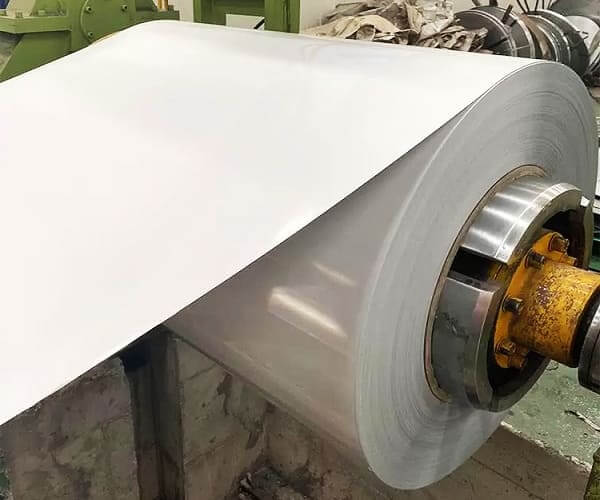 Huawei 3003 Producción de bobinas de aluminio recubiertas de PE
¿Por qué usar? 3003 Bobina recubierta de PE en camiones frigoríficos?
Eligiendo 3003 La bobina recubierta de PE para un camión frigorífico ofrece una combinación de ventajas estratégicas.
Las siguientes secciones describen las principales razones por las que los fabricantes lo prefieren., operadores, y equipos de mantenimiento.
Ventajas de rendimiento
- Resistencia a la corrosión: 3003 La aleación ya tiene una fuerte resistencia a la corrosión en muchos entornos., incluida la exposición a la humedad y al aire cargado de sal. El revestimiento de PE añade una barrera adicional, proteger las uniones y los bordes metálicos contra la entrada de humedad y la exposición química de los agentes de limpieza.
- Formabilidad y ductilidad.: 3003 En condiciones de temperamento comunes ofrece excelente estirabilidad y formabilidad., que es fundamental para la fabricación de paneles, secciones curvas, y adornos personalizados para camiones con perfiles de carrocería no estándar.
- Tolerancia al daño: La flexibilidad tanto de la aleación como del recubrimiento ayuda a resistir pequeños golpes y rayones que ocurren durante la carga., descarga, o impacto de escombros en la carretera, reducir la propensión a la corrosión local o la delaminación del revestimiento.
Beneficios operativos y de ciclo de vida
- Ahorro de peso: El aluminio es más ligero que el acero., y el uso de una bobina recubierta para los paneles ayuda a minimizar el peso sin sacrificar la integridad estructural. Esto se traduce en una mejor capacidad de carga útil y una posible economía de combustible durante la vida útil del vehículo..
- Mantenimiento y limpieza: Los recubrimientos de PE resisten las manchas y se degradan menos rápidamente cuando se limpian repetidamente con desengrasantes y desinfectantes comunes utilizados en operaciones de cadena de frío..
- Estética y marca: un uniforme, Una superficie estéticamente agradable que puede combinarse con el color o terminarse de manera consistente respalda la identidad de la marca y la percepción del cliente..
Consideraciones de seguridad e higiene
- Capacidad de limpieza: Las superficies lisas recubiertas de PE son generalmente más fáciles de limpiar., que respalda los requisitos normativos y de los clientes para la higiene en entornos de transporte que requieren una limpieza frecuente.
- Contacto con alimentos y cumplimiento: dependiendo de las regulaciones locales y la composición del recubrimiento, Los recubrimientos de PE pueden cumplir con los estándares de higiene que se aplican a ciertos entornos de transporte de calidad alimentaria o farmacéutico.. Es esencial verificar las certificaciones del recubrimiento y la compatibilidad con los agentes de limpieza utilizados por el operador..
Consideraciones económicas y de cadena de suministro
- Disponibilidad y escalabilidad: Proveedores reconocidos como Huawei Aluminium pueden ofrecer un suministro constante de 3003 Bobinas recubiertas de PE a escala, Garantizar que los cronogramas del proyecto y los ciclos de mantenimiento a largo plazo sean manejables..
- Costo-beneficio: mientras que el revestimiento de PE aumenta el costo en relación con el revestimiento desnudo 3003, la mayor durabilidad, mantenimiento reducido, y la posible extensión de la vida útil de los paneles a menudo justifican la inversión en aplicaciones de flotas refrigeradas..
Aluminio Huawei: Una introducción a un proveedor confiable
En cualquier decisión de adquisición, La confiabilidad del proveedor es casi tan importante como la especificación del producto..
Aluminio Huawei es un fabricante y proveedor destacado en el sector del aluminio con capacidades que se alinean bien con las necesidades de la industria del transporte refrigerado..
¿Quién es Huawei Aluminio??
- Negocio principal: Huawei Aluminium se especializa en la producción y suministro de bobinas de aluminio., hoja, lámina, y perfiles, con un enfoque en recubrimientos de sustrato combinados y opciones de acabado de valor agregado como PE, PVDF, y otros recubrimientos poliméricos.
- Alcance global: la empresa atiende a clientes en múltiples regiones, incluyendo américa del norte, Europa, y Asia, Entrega de productos estándar y soluciones personalizadas para el transporte., construcción, embalaje, y aplicaciones industriales.
- Certificaciones y calidad: Huawei Aluminium persigue sistemas de calidad estandarizados, controles de proceso, y regímenes de pruebas alineados con la práctica internacional. Las hojas de datos del sitio y del producto generalmente enfatizan la calidad constante del recubrimiento., adhesión, acabado superficial, y estabilidad dimensional.
- Capacidades: el proveedor enfatiza el procesamiento de bobinas, adhesión del recubrimiento, y acabados posteriores al revestimiento que permiten paneles y láminas listas para usar para el montaje de vehículos., revestimientos interiores, y revestimiento exterior.
¿Por qué elegir Huawei Aluminio para 3003 Bobinas recubiertas de PE?
- Consistencia y escala: para flotas y OEM, Las propiedades consistentes de la bobina y los tiempos de entrega confiables son importantes.. Las capacidades de producción de Huawei Aluminium ayudan a reducir el riesgo del proyecto.
- Control de calidad del recubrimiento: uniformidad del recubrimiento, adhesión, y la calidad de la superficie son esenciales para una larga vida útil en ambientes refrigerados. El énfasis de Huawei en los procesos de recubrimiento y las pruebas ayuda a satisfacer esta demanda.
- Apoyo técnico: Los ingenieros y el personal técnico pueden ayudar con la selección de materiales., espesor del recubrimiento, y preguntas de compatibilidad con los regímenes de limpieza y la exposición ambiental..
- Fiabilidad de la cadena de suministro: canales de distribución establecidos, capacidades logísticas, y el soporte posventa contribuyen a una experiencia de adquisición más fluida.
Las ofertas de Huawei Aluminium pueden alinearse con los requisitos mecánicos y de recubrimiento específicos para aplicaciones de camiones refrigerados., asegurando que 3003 Las bobinas recubiertas de PE cumplen los objetivos de rendimiento y al mismo tiempo mantienen la rentabilidad y el cumplimiento del cronograma.
Proceso de fabricación y recubrimiento.: cómo 3003 Se producen bobinas recubiertas de PE.
Una alta calidad 3003 La bobina recubierta de PE para camiones frigoríficos suele seguir una secuencia controlada desde la materia prima hasta el revestimiento terminado..
Comprender el proceso ayuda a los compradores a evaluar la calidad y predecir el rendimiento en condiciones de campo..
Paso 1: Producción de bobinas de aluminio.
- Lanzar y rodar: Los lingotes de aluminio se moldean en forma de palanquilla o losa y luego se laminan en caliente y en frío hasta obtener el espesor de bobina deseado.. Para aplicaciones de paneles de camiones, El espesor de la bobina puede variar desde relativamente delgado hasta moderadamente grueso., dependiendo del diseño del panel y los requisitos de carga.
- Templado y acabado: La bobina puede recocerse para lograr el estado blando deseado., seguido de endurecimiento por trabajo según sea necesario para alcanzar el temperamento especificado (a menudo H14 para conformabilidad con resistencia adecuada).
Paso 2: Preparación de la superficie
- Limpieza: La superficie se limpia para eliminar los aceites., lubricantes para rodamientos, y óxidos. Este paso garantiza la adhesión adecuada del revestimiento de PE posterior..
- Pretratamiento de superficies: dependiendo del sistema de recubrimiento, la superficie puede recibir un tratamiento previo para maximizar la adhesión y el rendimiento del recubrimiento. Esto puede incluir pretratamientos químicos o alisado mecánico..
Paso 3: Aplicación de revestimiento de PE
- Método de recubrimiento: Los recubrimientos de PE para bobinas se aplican normalmente mediante procesos de extrusión o fusión en caliente.. El método exacto depende de la tecnología del proveedor y del rendimiento del recubrimiento requerido..
- Espesor de recubrimiento: El espesor de la capa de PE se selecciona para equilibrar la protección con la flexibilidad y el costo.. Los recubrimientos más gruesos pueden proporcionar un mayor rendimiento de barrera, pero aumentan el espesor y el peso de la bobina..
- Cura y estabilización.: después de la aplicación, el recubrimiento se somete a una etapa de curado para polimerizar y reticular la capa de PE, Lograr una adhesión adecuada y la integridad de la superficie..
Paso 4: Garantía de calidad y pruebas.
- Pruebas de adherencia: pruebas estandarizadas (p.ej., Norma ASTM D3359) medir la adhesión del recubrimiento al sustrato de aluminio. Una mala adhesión puede provocar delaminación durante la flexión o el impacto..
- Impacto y flexibilidad: Se prueba la capacidad del recubrimiento para resistir el agrietamiento y el desgaste durante el doblado o la formación del panel., Proteger el rendimiento a largo plazo en las carrocerías de los camiones..
- Resistencia química y a la niebla salina: pruebas de exposición (p.ej., ASTM B117 para niebla salina) simular ambientes corrosivos, incluyendo sales para carreteras y agentes de limpieza, para garantizar que el recubrimiento mantenga su integridad.
- Tolerancias dimensionales: Los clientes de bobinas requieren un espesor preciso., ancho, y uniformidad del recubrimiento para garantizar una integración perfecta en la fabricación de paneles.
Paso 5: Embalaje, envío, y datos de servicio
- Embalaje: Las bobinas se empaquetan para su transporte para minimizar el daño y la contaminación., y para proteger los bordes y superficies del recubrimiento durante su manipulación..
- Hojas de datos: Los proveedores proporcionan hojas de datos técnicos que detallan las propiedades mecánicas. (resistencia a la tracción, límite elástico, alargamiento), espesor del recubrimiento, adhesión, y pautas de procesamiento recomendadas para la fabricación posterior.
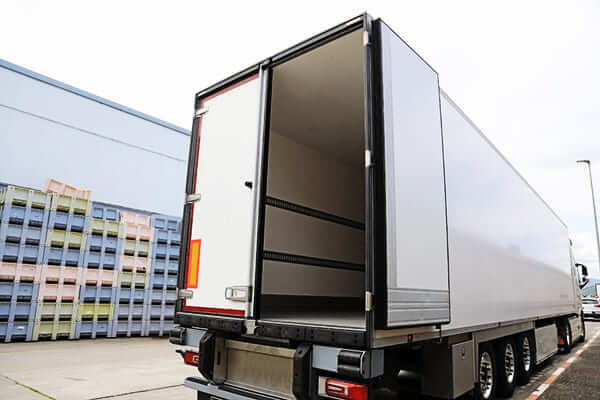 Exhibición de camión refrigerado de aluminio
Control de calidad y pruebas.: asegurando la confiabilidad
Quality control is essential in the production of 3003 PE coated coils for refrigerated trucks.
A robust QC program reduces risk for OEMs and fleet operators by ensuring consistent performance across lots and over time.
Key QC measures
- Raw material inspection: aluminum ingot and alloy verification, chemical composition checks, and supplier qualification are completed prior to processing.
- Process controls: continuous monitoring of rolling temperatures, surface finishing, and coating application parameters to ensure uniform results.
- Adhesión del recubrimiento: adhesion tests are performed to confirm a secure bond between PE and aluminum across the entire surface, including edges and bends.
- Coating thickness uniformity: non-destructive methods such as micrometry or calibrated coatings gauges check thickness across the coil to prevent weak spots.
- Environmental exposure tests: Las pruebas periódicas de niebla salina y de humedad miden la resiliencia a las condiciones ambientales encontradas en el funcionamiento de la cadena de frío..
- Pruebas mecánicas: Las pruebas de tracción y límite elástico en muestras representativas verifican que el sustrato conserva la resistencia adecuada después del recubrimiento..
Documentación y trazabilidad
- Trazabilidad del lote: Cada lote de bobinas es rastreable hasta las materias primas., parámetros del proceso, y lotes de recubrimiento, permitiendo una respuesta rápida a las desviaciones de calidad.
- Certificaciones: hojas de datos, informes de prueba, y se mantienen certificaciones de terceros para verificar el cumplimiento de los estándares relevantes y las especificaciones del cliente..
- Gestión del cambio: cualquier cambio en la química del recubrimiento, espesor, o los pasos del procesamiento están documentados, revisado, y comunicado a los clientes para evitar cambios inesperados en el rendimiento..
Aplicaciones en camiones frigoríficos: dónde 3003 Las bobinas recubiertas de PE brillan
Here are typical uses within refrigerated truck design and assembly, illustrating how 3003 PE coated coils can contribute to overall vehicle performance and service life.
Exterior panels and skins
- Resistencia al clima: exterior panels contend with sun, lluvia, temperature swings, road salts, and debris. PE coating adds a protective layer that helps resist UV degradation, chemical exposure, and moisture uptake.
- Aesthetic consistency: coated panels maintain uniform color and finish across the trailer exterior, supporting brand identity and professional appearance.
Interior wall and ceiling panels
- Higiene y limpieza: interior surfaces on refrigerated trailers require easy cleaning and resistance to sanitizers. PE coatings facilitate wipe-downs without compromising surface integrity.
- Resistencia al impacto: interior panels must withstand loading, pallets, and forklift contact. The ductility of 3003 helps resist dents, mientras que el revestimiento proporciona resistencia a los arañazos y opciones de reparación sencillas.
Protección de bordes de suelo y rampas.
- Resistencia al desgaste: mientras que los paneles de piso suelen ser más pesados y pueden usar materiales de piso específicos, Los bordes y las áreas de transición pueden beneficiarse de recubrimientos recubiertos de PE para reducir el desgaste y simplificar el mantenimiento..
Perfiles, adornos, y sellos
- Protectores de esquinas y bordes: Los revestimientos en molduras de AL y secciones de esquina pueden reducir la corrosión en uniones y uniones., mejorar la longevidad en presencia de niebla salina y humedad.
Análisis comparativo: 3003 Bobina recubierta de PE frente a alternativas
Para ayudar en la toma de decisiones, He aquí una visión comparativa de 3003 Bobinas recubiertas de PE frente a alternativas comunes utilizadas en aplicaciones de camiones frigoríficos.
La tabla presenta características típicas y compensaciones.. Tenga en cuenta que los valores reales varían según el temperamento., espesor del recubrimiento, y proveedor; consultar siempre la ficha técnica específica del producto.
| Propiedad / Parámetro |
3003 Recubierto de PE (temperamento H14) |
5052-H32 con revestimiento de PE |
Acero inoxidable (304) con acabado PE/pintado |
Aluminio desnudo (3003) sin recubrimiento |
| Composición de la aleación |
Al-Mn; alta formabilidad |
Al-Mg; mayor resistencia que 3xxx |
Resistente a la corrosión; alta durabilidad |
Base de aluminio sin revestimiento. |
| Presencia de recubrimiento |
Recubrimiento de PE en bobina |
Recubrimiento de PE u otro recubrimiento de polímero |
Pintado/recubierto de PE o laminado; dependiendo del sistema |
Ninguno |
| Fortalezas clave |
Excelente formabilidad; buena resistencia a la corrosión; ligero |
Mayor resistencia que 3xxx; todavía formable; buena resistencia al desgaste |
Resistencia superior a la corrosión; acabado superficial robusto; fácil de limpiar |
Ductilidad máxima; química de superficies más simple |
| Impacto del peso |
Luz; económico |
Ligeramente más pesado que el 3xxx desnudo debido al recubrimiento y a una mayor resistencia de la base |
Más pesado que las alternativas de aluminio.; dependiendo del espesor |
Opción más ligera, sin protección de recubrimiento |
| Consideraciones de costos |
Competitivo; el recubrimiento agrega costo |
Mayor costo debido a una aleación base y un recubrimiento más fuertes |
Costo más alto; apariencia y durabilidad premium |
Costo de material más bajo; mayor mantenimiento si no está recubierto |
| Resistencia a la corrosión |
Bueno con revestimiento de PE; Resiste la humedad y las sales. |
Fuerte, especialmente con revestimiento; adecuado para ambientes húmedos |
Excelente resistencia a la corrosión; alta estabilidad superficial |
Moderado; Recubrimientos protectores necesarios en ambientes hostiles. |
| Limpieza e higiene |
Bien; El revestimiento de PE favorece la limpieza |
Bien; El revestimiento de PE mantiene una superficie lisa |
Excelente; amplia gama de revestimientos y acabados |
Requiere más mantenimiento para la higiene en metal sin recubrimiento. |
| Implicaciones de fabricación |
Gran conformabilidad y radios de curvatura. |
Buena formabilidad; adecuado para tolerancias más estrictas |
Más difícil de formar y soldar; Se debe mantener la integridad del recubrimiento. |
Más fácil de moldear pero más propenso a rayarse y corroerse si no se recubre |
| Ciclo de vida y mantenimiento |
Equilibrado; larga vida con el cuidado adecuado |
Larga vida con mantenimiento; controles de recubrimiento esenciales |
Mayor vida útil en entornos hostiles; alto costo inicial |
Vida moderada si se aplican medidas de protección.; potencial de corrosión sin recubrimiento |
- Llevar: 3003 Las bobinas recubiertas de PE ofrecen una sólida combinación de conformabilidad, rentabilidad, y rendimiento protector adecuado para muchas aplicaciones de camiones refrigerados. Las alternativas ofrecen diferentes compensaciones en cuanto a fuerza, durabilidad, y costo, pero la combinación del peso ligero del aluminio con un revestimiento protector de PE sigue siendo convincente para la fabricación de paneles y revestimientos interiores..
Consideraciones económicas: costo, ahorros, y retorno de la inversión
Comprender la economía detrás 3003 Las bobinas recubiertas de PE para camiones frigoríficos requieren mirar más allá del precio de etiqueta y contemplar el coste total de propiedad, incluyendo costos de materiales, gastos de fabricación, mantenimiento, y posibles ahorros de combustible o beneficios de carga útil.
Componentes del costo
- Costo de materiales: Precio del sustrato de aluminio más costo de recubrimiento.. 3003 La aleación es generalmente menos costosa que las aleaciones de mayor resistencia como 5052 o 6061 pero aún tiene prima cuando se agrega recubrimiento.
- Costo de fabricación: formando, doblando, y la unión de bobinas recubiertas implican pasos de procesamiento que deben preservar la integridad del recubrimiento. Es posible que se necesite fabricación especializada para radios estrechos o áreas de alto contacto..
- Costo de mantenimiento: Los recubrimientos de PE pueden reducir los costos de limpieza y la eliminación de la corrosión durante la vida útil del vehículo., traduciéndose en ahorros.
- Costo del ciclo de vida: Las ganancias en eficiencia de combustible o capacidad de carga útil provenientes de paneles más livianos pueden compensar los mayores costos iniciales de material con el tiempo..
Consideraciones sobre el retorno de la inversión
- Ahorro de peso: Paneles de camión más ligeros mejoran la eficiencia de la carga útil., Reducir potencialmente el consumo de combustible y aumentar los ingresos por milla durante la vida útil de la flota..
- Durabilidad y confiabilidad: Los recubrimientos reducen el tiempo de inactividad por mantenimiento debido a la corrosión., rayones, o delaminación del revestimiento, contribuyendo a un mayor tiempo de actividad.
- Valor de reventa: bien mantenido, Los paneles estéticamente consistentes pueden mejorar el valor de reventa o intercambio..
Consideraciones de proveedores
- Plazos de entrega y confiabilidad: para OEM o flotas con cronogramas de proyecto estrictos, Proveedores confiables como Huawei Aluminium pueden ayudar a garantizar la entrega oportuna y una calidad constante en todas las líneas de producción..
- Opciones de personalización: algunos proyectos requieren un espesor de revestimiento personalizado, dimensiones del panel, o texturas superficiales. Un proveedor capaz debe ofrecer flexibilidad dentro de las tolerancias acordadas..
Preguntas frecuentes sobre 3003 Bobina de aluminio recubierta de PE para camión refrigerado
¿Qué hace? 3003 Bobina de aluminio recubierta de PE para camiones frigoríficos?
Significa que la aleación de aluminio es 3003, conocido por su conformabilidad y resistencia a la corrosión, recubierto con una capa protectora de polietileno (EDUCACIÓN FÍSICA) para mejorar la protección de la superficie, limpieza, y durabilidad en el entorno de la cadena de frío.
¿Por qué no utilizar aluminio desnudo en lugar de bobinas recubiertas de PE??
El aluminio desnudo es más susceptible a las manchas., rayones, y corrosión menor en ciertos ambientes, especialmente cuando se utilizan productos químicos de limpieza y sales para carreteras. El revestimiento de PE añade una barrera protectora., simplifica la limpieza, y ayuda a mantener la apariencia con el tiempo.
¿Cómo afecta el recubrimiento a la reparabilidad??
Los paneles revestidos se pueden reparar reemplazando la sección o costura afectada.; el recubrimiento agrega una capa protectora que puede ayudar a reducir la probabilidad de daños tempranos, pero puede requerir una nueva capa cuidadosa de las áreas reparadas para preservar la integridad general..
¿Cómo debo especificar el espesor y la calidad del recubrimiento para mi proyecto??
Definir el espesor del recubrimiento objetivo, adhesión, y calidad de acabado, y solicitar hojas de datos e informes de prueba. Para aplicaciones críticas, Considere un margen de seguridad en el espesor del recubrimiento para adaptarse al posible desgaste o abrasión..
¿Cuál es la vida útil esperada de 3003 Paneles recubiertos de PE en remolques frigoríficos?
La vida útil depende de la exposición., mantenimiento, e instalación. Con una limpieza adecuada, protección de bordes, e inspección periódica, Los paneles recubiertos pueden proporcionar un rendimiento duradero con necesidades de mantenimiento reducidas en comparación con el metal sin recubrimiento en entornos similares..
¿Cómo 3003 comparar con 5052 para paneles de camión frigorífico?
5052-H32 ofrece mayor resistencia que 3003 pero tiene menos conformabilidad en algunas operaciones de doblado. Si el diseño requiere mayor resistencia en geometrías restringidas, 5052 podría ser ventajoso; sin embargo, 3003 en revestimiento de PE proporciona un buen equilibrio de conformabilidad, resistencia a la corrosión, peso, y costo para muchos diseños de paneles.
Conclusión
la combinación de 3003 aleación de aluminio con una capa protectora de PE, incorporada en productos como 3003 Bobina de aluminio recubierta de PE para camiones refrigerados: ofrece un equilibrio convincente de conformabilidad, resistencia a la corrosión, ahorro de peso, y facilidad de mantenimiento que se adapta bien a las exigentes necesidades del transporte frigorífico.
El revestimiento de PE mejora la higiene, limpieza de superficies, y resistencia ambiental, que son fundamentales en aplicaciones de cadena de frío donde la confiabilidad y el tiempo de actividad se traducen directamente en eficiencia operativa y satisfacción del cliente..
Huawei Aluminium se destaca como una opción de proveedor creíble para flotas y fabricantes de equipos originales que buscan un suministro constante de 3003 Bobinas recubiertas de PE.
Con un enfoque en el control de calidad., producción escalable, y soporte técnico, Huawei Aluminium puede ayudar a los clientes a navegar por las especificaciones de recubrimiento, personalizaciones, y desafíos logísticos.
Combinando el rendimiento confiable de la aleación con revestimientos protectores robustos, esta solución material favorece una mayor seguridad, encendedor, y un transporte frigorífico más eficiente.
A través de una cuidadosa especificación, pruebas rigurosas, y diseño reflexivo, Los operadores pueden maximizar el valor a largo plazo de 3003 Bobinas recubiertas de PE.
El resultado es una práctica, reliable, y un enfoque preparado para el futuro para equipar camiones frigoríficos con paneles e interiores que resistan el desgaste diario, rutinas de limpieza, y los rigores de la logística de la cadena de frío.
Si está explorando opciones de materiales para su proyecto de camión frigorífico, considere colaborar con Huawei Aluminium para obtener más información sobre 3003 Opciones de bobina recubierta de PE, rangos de espesor de recubrimiento, y las hojas de datos precisas que confirman la compatibilidad con su diseño, régimen de limpieza, y requisitos reglamentarios.
Con las especificaciones correctas y un proveedor confiable, puedes lograr un duradero, eficiente, Una solución coherente y coherente con la marca que satisface tanto las necesidades actuales como las ambiciones del futuro en el transporte refrigerado..
Compartir con PDF: Descargar
Por qué elegirnos?
Henan Huawei Aluminio Co., Limitado. es el líder de muchos fabricantes y proveedores de aluminio en China. Controlamos estrictamente la calidad y nos enfocamos en los clientes.. Esperamos tener una cooperación profunda con usted y brindarle servicios OEM personalizados de productos de material de aluminio de alta calidad.. Si desea obtener los mejores y más nuevos precios por kg o por tonelada de peso estándar, por favor contáctenos.