Introduction
6061 T6 Aluminum Properties rank among the most frequently specified material data sets in modern engineering.
Designers, machinists, fabricators, and procurement teams use this heat-treatable wrought alloy when they need a balance of strength, paglaban sa kaagnasan, weldability, machinability, and affordability.
The T6 temper transforms standard 6061 aluminum from a moderate-strength, highly formable alloy into a robust structural material with predictable mechanical performance.
This guide explores 6061 T6 aluminum properties in depth. You will learn what 6061 T6 aluminum is, how its chemical composition drives performance, which mechanical and physical values matter for design, how the alloy compares with 6063 T6, 7075 T6, 2024 T3, at 5052 H32, and where engineers apply the material most effectively.
The article also covers fabrication guidelines, selection standards, and sourcing considerations.
Whether you design aircraft brackets, automotive components, precision fixtures, or architectural framing, understanding 6061 T6 aluminum properties helps you avoid costly material substitution errors and improve product reliability.
What Is 6061 T6 Aluminum?
6061 aluminum is a heat-treatable wrought aluminum alloy in the 6000 serye ng mga. The Aluminum Association registers it as a magnesium-silicon-copper alloy.
The addition of magnesium and silicon creates the intermetallic phase magnesium silicide, often written as Mg₂Si.
This phase gives 6061 its response to heat treatment. Copper increases strength and improves the alloy’s ability to machine cleanly in the T6 condition.
The “6061” portion identifies the alloy chemistry. The “T6” suffix identifies the temper.
A T6 temper means the manufacturer solution heat-treats the metal, quenches it rapidly, and then artificially ages it to a stable, high-strength condition.
The T6 temper produces higher tensile and yield strength than the naturally aged T4 temper while retaining enough ductility for many structural applications.
Chemical Composition of 6061 Aluminyo
The Aluminum Association controls the chemical limits for 6061.
The table below lists the nominal and maximum composition ranges by weight percent.
| Element |
Weight Percent |
| Silicon |
0.40 – 0.80 |
| Bakal na Bakal |
0.70 max |
| Tanso |
0.15 – 0.40 |
| Mga mangganeso |
0.15 max |
| Magnesium |
0.80 – 1.20 |
| Chromium |
0.04 – 0.35 |
| Sink |
0.25 max |
| Titanium |
0.15 max |
| Other elements, each |
0.05 max |
| Other elements, total |
0.15 max |
| Aluminyo |
Remainder |
Magnesium and silicon are the primary strengthening elements. They combine during artificial aging to form fine Mg₂Si precipitates.
Copper contributes additional strength, but 6061 keeps copper low enough to preserve better corrosion resistance than 2024.
Chromium helps control grain structure and improves resistance to stress corrosion cracking in thick sections.
Iron is an impurity that can form coarse particles, so premium 6061 products often specify low iron for improved fatigue resistance and anodizing response.
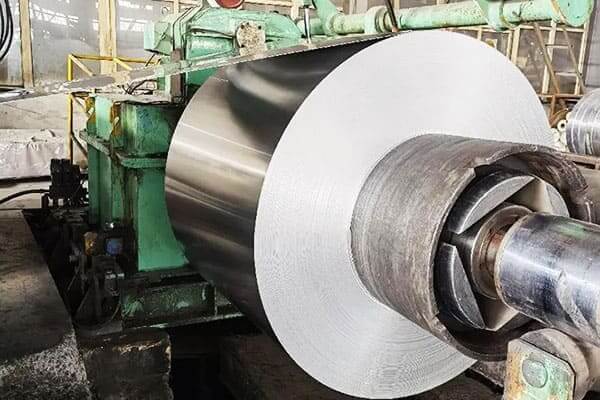 6061 T6 Aluminum Properties
How the T6 Temper Changes the Alloy
The T6 temper is not a coating or a surface treatment. It is a bulk metallurgical condition. A typical T6 heat treatment follows three stages:
- Solution heat treatment: The producer heats the aluminum to approximately 985°F to 1050°F (530°C to 565°C). This dissolves magnesium, silicon, and copper into solid solution.
- Quenching: The metal cools rapidly, usually in water or forced air. Rapid cooling traps the alloying elements in a supersaturated solid solution at room temperature.
- Artificial aging: The producer reheats the quenched alloy to a lower temperature, typically 320°F to 400°F (160°C to 204°C), for several hours. Fine precipitates form, strengthening the matrix.
This precipitation hardening process boosts yield strength significantly compared with annealed 6061-O.
The T6 temper also increases hardness, improves machinability, and provides stable mechanical properties that do not change dramatically at room temperature over time.
Common Forms and Product Shapes
6061 T6 aluminum appears in almost every standard wrought product form. You can purchase it as:
- Sheet and plate
- Flat bar, round bar, square bar, and hex bar
- Extruded angles, channels, I-beams, and custom profiles
- Seamless and drawn tube
- Pipe
- Forgings
- Wire
- Cold-finished and extruded rod
Each product form may have slightly different mechanical properties because of grain flow, section thickness, and processing history.
Halimbawa na lang, extruded 6061 T6 typically offers longitudinal tensile strength near 310 MPa, while thick plate may show slightly lower values.
Always verify the exact properties for the product form you specify.
Mechanical Properties of 6061 T6 Aluminum
Mechanical properties define how 6061 T6 resists load, deflection, fatigue, and permanent deformation.
The table below summarizes typical room-temperature values for extruded and rolled 6061 T6 products.
These values represent typical performance, not guaranteed design minimums.
| Mechanical Property |
Metric Value |
Imperial Value |
| Ultimate tensile strength |
310 MPa |
45,000 psi |
| Tensile yield strength, 0.2% offset |
276 MPa |
40,000 psi |
| Elongation at break |
8 – 17% |
8 – 17% |
| Modulus of elasticity |
68.9 GPa |
10,000 ksi |
| Shear strength |
207 MPa |
30,000 psi |
| Fatigue strength, 5 × 10⁸ cycles |
96.5 MPa |
14,000 psi |
| Hardness, Brinell |
95 HB |
95 HB |
| Hardness, Rockwell B |
60 HRB |
60 HRB |
| Poisson’s ratio |
0.33 |
0.33 |
The exact elongation value depends on product form and specimen configuration.
Thin sheet often reaches 16 sa 17 percent elongation, while thick plate and bar may measure 8 sa 12 percent.
Product standards such as ASTM B209, ASTM B211, and ASTM B221 state minimum values for each form.
Lakas ng Paghatak, Yield Strength, and Elongation
The ultimate tensile strength of 6061 T6 aluminum is approximately 310 MPa, o 45,000 psi.
This is the maximum stress the material can withstand before fracture under a slow, monotonic tensile load.
The tensile yield strength is about 276 MPa, o 40,000 psi. Yield strength is the critical design value for most structural applications because it marks the stress level at which the material begins to deform permanently.
Designers often select 6061 T6 because the yield strength approaches 90 percent of the ultimate tensile strength.
That ratio gives predictable structural performance. When a part yields, it deforms visibly before failure, providing a margin of safety in many assemblies.
Elongation at break measures ductility. 6061 T6 demonstrates moderate ductility, usually between 8 at 17 percent.
This ductility allows the alloy to absorb some overload and local stress without immediate fracture.
If your forming operation requires tight bends, consider 6061 T4 or 6061-O first. You can form the part in the softer condition and then artificial age it to T6 after forming.
Hardness and Fatigue Strength
6061 T6 aluminum typically registers 95 HB on the Brinell hardness scale and about 60 on the Rockwell B scale. Hardness correlates with wear resistance and machinability.
The T6 temper hardens the alloy enough to produce crisp, clean machined edges while still allowing reasonable tool life.
Hardness also helps the surface resist dents, mga gasgas na, and fretting in sliding contact.
Fatigue strength is approximately 96.5 MPa, o 14,000 psi, based on a rotating beam test at 500 million cycles.
This value appears relatively low compared with the tensile yield strength. Aluminum does not have a true endurance limit like steel, so fatigue continues to decline with additional cycles.
Engineers must design fillets, generous radii, and smooth surface finishes to reduce stress concentrations in cyclic loading applications.
Anodizing or shot peening can improve fatigue performance in some cases.
Modulus of Elasticity and Shear Strength
The modulus of elasticity for 6061 T6 aluminum is 68.9 GPa, o 10,000 ksi. This stiffness is roughly one-third that of structural steel.
A 6061 T6 beam deflects about three times more than a steel beam of identical shape and load. Engineers often compensate by increasing section depth or adding ribs.
The specific stiffness, however, remains excellent because aluminum weighs only about one-third as much as steel.
Shear strength runs about 207 MPa, o 30,000 psi. This value helps size bolts, rivets, and shear tabs.
In bearing-critical joints, use allowable bearing values from the relevant aerospace or structural design specification rather than relying on shear strength alone.
Impact of Temperature on Mechanical Properties
6061 T6 aluminum properties change with temperature. The alloy performs well at low temperatures.
Strength and ductility actually increase as temperature drops, making 6061 T6 suitable for cryogenic and refrigerated structural applications.
At elevated temperatures, strength declines. Prolonged exposure above 150°C to 177°C can overage the T6 microstructure and reduce properties permanently.
The table below shows typical short-term tensile properties at selected temperatures.
| Temperature |
Ultimate Tensile Strength |
Yield Strength |
Pagpapahaba |
| -196°C (-320°F) |
414 MPa (60 ksi) |
324 MPa (47 ksi) |
22% |
| 24°C (75°F) |
310 MPa (45 ksi) |
276 MPa (40 ksi) |
12% |
| 100°C (212°F) |
290 MPa (42 ksi) |
262 MPa (38 ksi) |
12% |
| 149°C (300°F) |
234 MPa (34 ksi) |
214 MPa (31 ksi) |
20% |
| 204°C (400°F) |
131 MPa (19 ksi) |
103 MPa (15 ksi) |
28% |
These values represent unsoaked tensile test data, not long-term design allowables.
If your application operates continuously above 150°C, evaluate alternative alloys such as 6061 T6 with protective insulation, 2024 T3, 2219, or an engineered aluminum-ceramic material.
Physical Properties of 6061 T6 Aluminum
Physical properties affect thermal management, electrical performance, dimensional stability, and corrosion behavior.
The table below lists common physical values for 6061 T6 aluminum.
| Physical Property |
Metric Value |
Imperial Value |
| Density |
2.70 g/cm³ |
0.0975 lb/in³ |
| Melting range |
582 – 652°C |
1080 – 1205°F |
| Specific heat capacity |
0.896 J/g·K |
0.214 BTU/lb·°F |
| Thermal conductivity |
167 W/m·K |
1160 BTU·in/hr·ft²·°F |
| Coefficient of thermal expansion, 20–100°C |
23.6 µm/m·°C |
13.1 × 10⁻⁶ in/in·°F |
| Kondaktibiti ng kuryente |
40 – 43% IACS |
40 – 43% IACS |
| Electrical resistivity |
4.32 µΩ·cm at 20°C |
1.70 µΩ·in at 68°F |
Density and Melting Range
6061 T6 aluminum has a density of 2.70 gramo bawat sentimetro kubiko, o 0.0975 pounds per cubic inch.
This is about one-third the density of steel and about one-third the density of copper, which creates significant weight savings in transportation structures.
A part that weighs 30 pounds in steel can weigh slightly over 10 pounds in 6061 T6 aluminum if section geometry remains equal.
The melting range is not a single temperature because 6061 is an alloy.
The solidus is about 582°C, and the liquidus is about 652°C. Welding processes operate well below this range, but designers should not expose the material to temperatures above 400°F for prolonged periods without evaluating the effect on strength.
Thermal Conductivity and Expansion
6061 T6 aluminum conducts heat at approximately 167 W/m·K. This thermal conductivity is lower than pure aluminum but still much higher than stainless steel.
The alloy dissipates heat effectively in heatsinks, engine components, electronic housings, and braking system brackets.
Its thermal conductivity also helps reduce hot spots in welded structures.
The coefficient of thermal expansion is 23.6 micrometres per meter per degree Celsius.
This is roughly twice the thermal expansion of carbon steel. Designers must accommodate expansion in long structural members, solar racking, rail systems, and multi-material assemblies.
Use slotted holes, expansion joints, or compatible coatings to prevent thermal stress.
Electrical Conductivity
6061 T6 aluminum offers electrical conductivity of 40 sa 43 percent of the International Annealed Copper Standard, or IACS.
This is lower than pure aluminum and much lower than copper. Gayunpaman, aluminum’s low density makes it useful for some electrical bus bars and conductor connectors where weight matters more than volume.
For high-conductivity applications, engineers often choose AA-1350 or 6101 aluminum instead.
Corrosion Resistance
6061 T6 aluminum resists corrosion well in many atmospheric environments.
The alloy forms a thin aluminum oxide film spontaneously when exposed to air.
This oxide layer reduces further oxidation and protects the base metal. 6061 T6 performs well in rural, urban, and mild industrial atmospheres.
In marine environments, 6061 T6 aluminum is acceptable for above-deck structures, railings, masts, and hardware when protected with anodizing or paint.
Gayunpaman, it is not as seawater-resistant as the 5000 series alloys such as 5052 H32 or 5083 H111.
The copper content in 6061 makes it slightly more susceptible to pitting and galvanic corrosion when directly coupled with stainless steel or copper alloys in the presence of seawater.
Use non-conductive isolation pads, sealants, or appropriate coatings to prevent galvanic couples.
Machinability and Formability
In the T6 condition, 6061 aluminyo machines with better chip control and surface quality than most 5000 series alloys.
Machinability ratings typically place 6061 T6 at about 50 percent when compared with free-cutting brass at 100 percent.
This is slightly lower than 2011 o 6262 free-cutting grades, but 6061 T6 remains a favorite for general machining because it offers a good blend of shop productivity, paglaban sa kaagnasan, and strength.
Formability in T6 is fair. You can bend, blank, and form 6061 T6, but it requires larger bend radii than 6061-O or 6061-T4.
Sharp bends may crack. For complex formed parts, many manufacturers form the metal in the T4 condition and artificially age it to T6 afterward.
Weldability
6061 T6 aluminum welds well with gas tungsten arc welding, gas metal arc welding, and resistance welding.
The typical filler alloys are 4043 at 5356. Filler 4043 offers easier weldability and lower melting temperature, while 5356 provides higher strength and better color match after anodizing.
Welding reduces strength in the heat-affected zone. The as-welded tensile strength of 6061 T6 often drops to approximately 165 sa 186 MPa, o 24 sa 27 ksi, depending on joint design and filler metal.
For critical structures, you can perform a post-weld heat treatment to restore much of the T6 strength, but distortion and cost must be evaluated.
Many designers simply increase the section thickness in welded areas rather than re-heat treating the entire assembly.
6061 T6 vs Other Aluminum Alloys
No material choice exists in isolation. Engineers compare 6061 T6 aluminum properties with other common grades before finalizing a design.
The table below compares 6061 T6 with four widely used alloys.
| haluang metal & Temper |
Ultimate Tensile Strength (MPa) |
Yield Strength (MPa) |
Pagpapahaba (%) |
Brinell Hardness (HB) |
Corrosion Resistance |
Weldability |
Typical Applications |
| 6061 T6 |
310 |
276 |
8 – 17 |
95 |
Good |
Good |
Structural parts, machined components, frames, marine hardware |
| 6063 T6 |
241 |
214 |
8 – 16 |
73 |
Very good |
Good |
Architectural extrusions, trim, display framing, railings |
| 7075 T6 |
572 |
503 |
5 – 11 |
150 |
Fair |
Poor |
High-stress aerospace parts, molds, structural components |
| 2024 T3 |
485 |
345 |
10 – 18 |
120 |
Fair |
Poor |
Aircraft skins, truck wheels, gears, high-fatigue parts |
| 5052 H32 |
230 |
193 |
10 – 16 |
60 |
Excellent |
Excellent |
Marine sheet, chemical tanks, mga signage, fuel tanks |
Applications of 6061 T6 Aluminum
The balanced 6061 T6 aluminum properties make the alloy a default choice across many industries.
It works where moderate strength, good corrosion resistance, reliable weldability, and precision machinability all matter.
Aerospace and Aircraft Components
6061 T6 aluminum appears in aircraft and aerospace structures where 7075 T6 is unnecessary or where corrosion and weldability matter. Applications include:
- Engine mounts and brackets
- Hydraulic manifolds and fittings
- Avionics enclosures
- Unmanned aerial vehicle frames
- Seat track components
- Camera mounts and sensor housings
- Light aircraft wing ribs and fuselage supports
Aerospace fabricators value 6061 T6 because it supplies a predictable, certified mechanical property set with good anodizing response and lower stress corrosion risk than high-copper alloys.
Automotive and Marine Parts
In automotive design, 6061 T6 reduces weight without eliminating strength. You will find it in:
- Suspension control arms and steering knuckles
- Brake caliper brackets and pedal assemblies
- Engine intake manifolds and charged air cooler tubes
- Wheel adapters and hub spacers
- EV battery tray support frames
- Roof rails and mounting brackets
Marine fabricators use 6061 T6 for masts, booms, hardtop frames, gangway structures, deck hardware, and outboard engine components.
In direct saltwater immersion, designers usually select 5000 series plate or add protective coatings to 6061 T6.
Structural and Architectural Framing
6061 T6 aluminum provides an excellent alternative to steel in modular structures, platforms, and industrial framing.
It resists corrosion without hot-dip galvanizing and reduces weight for easier installation. Common applications include:
- Machine frames and safety guarding
- Conveyor rails and support beams
- Catwalk and platform structures
- Solar panel racking and tracker components
- Handrails and access ladders
- Facade support frames
- Modular cleanroom frames
Extruded 6061 T6 profiles deliver high stiffness at low weight. Designers can create complex cross sections that optimize moment of inertia without adding unnecessary mass.
Precision Machined Components and Tooling
Machine shops rely on 6061 T6 aluminum for precision parts and production fixtures.
The alloy cuts cleanly, holds tight tolerances, and anodizes well. Typical machined parts include:
- Vacuum chambers and pneumatic manifolds
- Robotics end effectors
- Inspection fixtures and jigs
- Optical mounts and camera plates
- Semiconductor equipment components
- Prototype housings
- Tooling plates and adapter blocks
Because 6061 T6 is widely available as stress-relieved T651 plate, it resists distortion during machining.
T651 plate undergoes stretching after heat treatment, which reduces residual stress and improves stability for deep-pocket and thin-wall work.
Consumer Products and Sporting Goods
6061 T6 aluminum appears in everyday products that require light weight, good strength, and attractive finishing. Examples include:
- Bicycle frames, handlebars, and seat posts
- Scuba tanks and compressed air cylinders
- Flashlight bodies and portable electronic housings
- Climbing carabiners and pulleys
- Camera gimbals and drone components
- Archery risers and stabilizer tubes
- Camping furniture and backpack frames
The anodizing response of 6061 T6 allows manufacturers to produce durable colored finishes that resist scratching and fading.
Fabrication and Processing Guidelines
Working with 6061 T6 aluminum requires appropriate tools, speeds, and techniques.
The following guidelines help you machine, form na, weld, heat treat, and finish the alloy reliably.
Cutting, Machining, and Drilling
6061 T6 aluminum machines best with sharp, positive-rake carbide tools. Use high spindle speeds and moderate feed rates.
Avoid dwelling in one spot, which can generate heat and cause chip welding. For CNC milling:
- Use polished carbide end mills with 2 o 3 flutes for general machining.
- Apply flood coolant or minimum-quantity lubrication to flush chips.
- Climb milling improves surface finish and reduces chatter.
- Use peck drilling for holes deeper than 4 diameters.
- Select cutting speeds from 800 sa 1500 surface feet per minute for carbide tools, depending on tool coating and machine rigidity.
A common silicone-based lubricant or water-soluble coolant works well. Avoid heavy sulfurized cutting oils unless you clean thoroughly before finishing.
Forming and Bending
6061 T6 aluminum can be formed, but you must respect its lower ductility compared with 6061-O. For sheet:
- Use generous bend radii. A good starting point for 6061 T6 sheet is 2 sa 3 times the material thickness for 90-degree bends.
- Bend perpendicular to the rolling direction when possible.
- Use soft urethane dies or protective tape to prevent marking.
- If you need a tighter radius, form in T4 condition and age to T6 after fabrication.
For extruded profiles, bending in T6 may require rotary draw bending with special tooling.
For complex curves, form in T4 and then artificial age, or consider 6063 T6 for more forgiving extrusion bending.
Welding Best Practices
Welding 6061 T6 demands clean, oxide-free surfaces. Aluminum oxide melts at a much higher temperature than the base metal, so remove it with a stainless steel wire brush used only for aluminum. Clean the surface with acetone or an approved degreaser.
- Use gas tungsten arc welding or gas metal arc welding.
- Select filler 4043 for lower cracking sensitivity and easier flow.
- Select filler 5356 when higher weld strength or saltwater immersion is required.
- Preheat thick sections slightly, generally to 150°F to 250°F.
- Use argon shielding gas for GTAW and an argon-helium mix for thick sections.
- Plan weld sequences to minimize distortion.
Remember that the heat-affected zone will soften after welding. Design welded joints away from high-stress regions, or increase local thickness.
Heat Treatment and Aging After Welding
If your welded 6061 T6 assembly must recover full strength, you can return it to the T6 temper. A typical post-weld heat treatment includes:
- Solution heat treat at 985°F to 1050°F.
- Water quench.
- Artificial age at 350°F to 375°F for 6 sa 10 hours.
This process restores much of the strength but may distort the part. Stress relief and fixture support help control movement.
For assemblies that cannot be re-heat treated, use a higher-strength filler and design with adjusted allowables.
Surface Finishing and Anodizing
6061 T6 aluminum accepts many surface finishes. It polishes, brushes, bead blasts, and anodizes well. Common processes include:
- Sulfuric acid anodizing, Type II, for corrosion protection and color
- Hardcoat anodizing, Type III, for abrasion resistance
- Chromate conversion coating for electrical conductivity and paint adhesion
- Powder coating for architectural and consumer products
- Electroless nickel plating for wear surfaces
The copper content in 6061 can create a slightly yellower anodic coating than 6063, but it still produces durable finishes.
For critical appearance parts, specify 6063 or use a two-step anodizing process.
How to Select the Right 6061 T6 Product
Choosing the right 6061 T6 product avoids hidden costs and ensures compliance with industry requirements.
Material selection involves product form, governing standard, dimensional tolerance, and supplier documentation.
Key Specifications and Standards
Different product forms have different standards. The table below lists common specifications for 6061 T6 aluminum.
| Product Form |
Common Standards |
| Sheet and plate |
ASTM B209, AMS 4027, AMS-QQ-A-250/11 |
| Bar, rod, and wire |
ASTM B211, AMS 4117, AMS-QQ-A-225/8 |
| Extruded bars, rods, and profiles |
ASTM B221, EN 755-2 |
| Seamless tube |
ASTM B210, AMS 4082 |
| Welded tube |
ASTM B313 |
| Pipe |
ASTM B241 |
| Forgings |
ASTM B247 |
The AMS specifications generally require tighter controls than ASTM.
Aerospace and defense customers often specify AMS materials and require first-article inspection and lot testing.
Industrial and general fabrication customers commonly use ASTM B209, ASTM B211, or ASTM B221.
Quality Certifications and Test Reports
Always request a mill test report, also called a material test report or MTR. The MTR should show:
- Actual chemical composition
- Lakas ng paghatak, yield strength, and elongation
- Product form and dimensions
- Heat number or lot number
- Applicable specification
- Supplier and mill information
For critical parts, request additional testing such as hardness, ultrasonic inspection, conductivity, or stress-corrosion resistance.
ISO 9001 certification of the distributor or mill is not a material property, but it supports traceability and process control.
Sourcing from a Reliable Supplier: Huawei Aluminum
Huawei Aluminum supplies 6061 T6 aluminum products for machining, fabrication, structural engineering, aerospace support, automotive components, and industrial equipment.
The company maintains an extensive inventory of 6061 T6 aluminum plate, sheet, flat bar, round bar, extruded profiles, and tube in multiple thicknesses and tempers.
Customers can obtain 6061 T6 aluminum with full mill test reports, precise saw cutting, protective packaging, and export-ready documentation.
When you source 6061 T6 aluminum from Huawei Aluminum, you gain access to technical support for product selection, tolerance verification, and surface finishing recommendations.
The team helps engineers confirm that the material meets ASTM or AMS standards before cutting.
For machined parts that require dimensional stability, Huawei Aluminum also provides stress-relieved 6061 T651 plate. This supply model reduces scrap, lead time, and material rejection risk.
Whether you need a single prototype plate or a container of extruded 6061 T6 profiles, selecting an experienced supplier improves repeatability and keeps your project on schedule.
Frequently Asked Questions About 6061 T6 Aluminum Properties
What does 6061 T6 mean?
6061 identifies the aluminum alloy chemistry. T6 identifies the temper. A T6 temper means the material was solution heat-treated, quenched, and artificially aged to achieve higher strength and hardness.
Is 6061 T6 aluminum stronger than steel?
6061 T6 aluminum is not as strong as most structural steels. Its ultimate tensile strength is about 310 MPa, while common structural steel often exceeds 400 sa 550 MPa. Gayunpaman, 6061 T6 has a much better strength-to-weight ratio because it weighs about one-third as much as steel.
Can you weld 6061 T6 aluminum?
Yes. 6061 T6 welds well with GTAW and GMAW using 4043 o 5356 filler. Welding creates a softened heat-affected zone. The as-welded strength is lower than the base T6 strength, but you can restore much of it through post-weld heat treatment.
Is 6061 T6 aluminum corrosion resistant?
6061 T6 offers good corrosion resistance in atmospheric and mild industrial environments. It resists oxidation and performs well with anodizing. For continuous saltwater immersion, 5000 series alloys such as 5052 o 5083 provide better corrosion resistance.
Can you bend 6061 T6 aluminum?
Yes, but you need a larger bend radius than softer tempers allow. For tight bends, form na 6061 in the T4 or O condition and then age the part to T6 after forming.
What is the difference between 6061 T6 and 6061 T651?
Both have the T6 strength level. T651 material is stress-relieved by stretching after solution heat treatment and before artificial aging. This reduces residual stress and improves dimensional stability during machining, especially for plate and extruded bar.
What are the most important 6061 T6 aluminum properties for design?
The most important values are tensile yield strength, ultimate tensile strength, elongation, fatigue strength, modulus of elasticity, shear strength, hardness, and corrosion resistance. Design and material selection typically focus on yield strength for static loading and fatigue strength for cyclic loading.
Conclusion
6061 T6 aluminum properties provide a practical combination of structural strength, paglaban sa kaagnasan, weldability, formability, and machinability.
This alloy delivers about 276 MPa yield strength, 310 MPa ultimate tensile strength, at 95 Brinell hardness in the T6 condition.
It performs well from atmospheric exposure to precision machined components and welded frames.
Understanding 6061 T6 aluminum properties allows designers to select the correct product form, compare alternatives such as 6063 T6 and 7075 T6, and optimize fabrication methods.
Whether you machine fixtures, weld structural frames, bend sheet metal components, or specify aerospace brackets, 6061 T6 remains one of the most dependable and widely available aluminum alloys.
For certified material, dimensional cutting, and technical support, Huawei Aluminum supplies 6061 T6 aluminum plate, sheet, bar, tube, and extrusions with complete documentation and dependable lead times.
Work with a supplier that understands the product and the standards, and you will translate the material’s inherent balance into reliable, cost-effective components.
Share with PDF: Download