Aluminum Coils Cold-rolled vs Hot-rolled
Aluminum Coils Cold-rolled vs Hot-rolled: this comparison drives many material decisions in automotive, paturaa, packaging, Te mau nota, and industrial manufacturing.
If you buy aluminum coil regularly, you already know that the rolling route changes surface quality, thickness tolerance, mechanical properties, and final cost.
This guide explains both processes, compares performance data, and gives you a practical framework for selecting the right aluminum coil.
Aluminum coil is a continuous strip of aluminum alloy wound into a coil after rolling. Mills produce it from cast ingots or continuous cast slabs.
The two main process routes are hot rolling and cold rolling.
Hot-rolled aluminum coil generally has a rougher surface, thicker gauge, and lower cost for heavy applications.
Cold-rolled aluminum coil offers a smoother surface, tighter gauge control, and higher strength through work hardening.
At Huawei Aluminum, we supply both hot-rolled and cold-rolled aluminum coils. Our engineers help customers match alloy, temper, and finish to exact production requirements.
In this article, we use Aluminum Coils Cold-rolled vs Hot-rolled as the central comparison. You will find process descriptions, data tables, application examples, and FAQs.
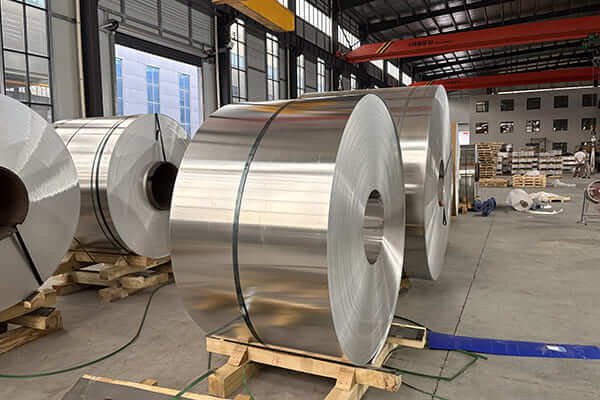 Aluminum Coils Cold-rolled vs Hot-rolled
What Are Aluminum Coils?
Aluminum coils are continuous rolled aluminum products. They come in widths from about 800 mm to over 2,600 mm and thicknesses from foil gauges below 0.1 mm to heavy sheets above 6 Te mau mana'o tauturu no te. Manufacturers use them for stamping, bending, deep drawing, roll forming, Te mau mana'o tauturu no te, and many other processes.
Definition and Role
An aluminum coil begins as an ingot or slab. A hot rolling mill reduces the slab into a long strip. A cold rolling mill further reduces the strip to the desired final gauge.
The strip is then leveled, edge trimmed, and wound into a coil. The coil format allows high-speed downstream processing in automotive, appliance, paturaa, and packaging lines.
Aluminum coils provide high strength-to-weight ratio, Te mau mana'o tauturu no te haapiiraa, thermal conductivity, and recyclability.
Engineers choose aluminum coils over steel when they need lightweight parts, Te mau mana'o tauturu no te haapiiraa, or electrical and thermal performance.
How Rolling Shapes Structure and Performance
Rolling changes the internal grain structure of aluminum. Hot rolling occurs above the recrystallization temperature.
The metal softens during rolling, recrystallizes, and develops a relatively isotropic grain structure.
Cold rolling occurs below the recrystallization temperature. It elongates grains, creates dislocations, and increases strength.
The final temper and mechanical properties depend heavily on whether the coil is hot-rolled or cold-rolled.
The terms “hot-rolled aluminum coil” e “cold-rolled aluminum coil” can confuse buyers because most thin cold-rolled aluminum starts as hot-rolled coil.
You should think of the final rolling process and finish. A coil supplied as hot-rolled finish has been hot rolled and coiled without major cold reduction.
A coil supplied as cold-rolled finish has undergone significant cold reduction, intermediate annealing if needed, and final finishing.
Hot-Rolled Aluminum Coils: Process, Benefits, and Limits
Hot-rolled aluminum coil is produced at high temperatures. This process is ideal for thicker gauges, structural alloys, and applications where surface finish is less critical.
How Hot Rolling Works
A typical hot rolling line starts with a cast ingot. The ingot may be 300 e tae atu i te 600 mm thick for direct chill casting.
Some mills use continuous cast slabs that are 15 e tae atu i te 25 mm thick.
The slab enters a homogenizing furnace at 450 °C to 550 °C. Heating lasts 6 i te 24 hours depending on alloy and ingot size.
Homogenization dissolves alloy segregation and prepares the material for rolling.
After heating, the slab passes through a reversing breakdown mill. This mill reduces thickness to about 20 e tae atu i te 40 Te mau mana'o tauturu no te.
The strip then enters a tandem hot finishing mill. It exits as coil at 2 e tae atu i te 6 mm thick, depending on the product route. Coiling temperature typically ranges from 250 °C to 350 °C.
At these temperatures, aluminum recrystallizes during and between passes. The mill can achieve large thickness reductions without excessive rolling force.
The resulting coil has a mill finish surface with visible rolling marks and an oxide layer.
Manufacturers may anneal or flatten the coil, but the surface remains rougher than cold-rolled aluminum.
Alloys and Tempers
Hot-rolled aluminum coils commonly use:
- 1050, 1060, 1100 for general industrial and chemical applications
- 3003, 3004 for tanks, Te mau nota, and architectural components
- 5052, 5083, 5754, 5454 for marine, pressure vessels, and automotive structural parts
- 6061, 6082 for structural and machined components
Common tempers for hot-rolled finish include F, O, H111, H112, and T4/T6 for heat-treatable alloys.
H112 indicates slight work hardening from hot rolling. O temper means the coil has been fully annealed after rolling. H111 is also annealed and lightly stretched.
Advantages
Hot-rolled aluminum coils offer several benefits:
- Lower processing cost for thick gauges
- Good ductility and formability in O and H111/H112 tempers
- Wider thickness range, especially above 4 Te mau mana'o tauturu no te
- Good weldability for common structural alloys
- Fewer internal stresses than heavily cold-worked coil
When you need thick aluminum sheet or plate in coil form, hot rolling is often the only practical route.
Hot-rolled 5083-H112, for example, works well in marine hulls and LNG storage because it resists corrosion and retains toughness.
Limitations
Hot-rolled aluminum coils also have limitations:
- Rougher surface finish, Te mau nota 1.5 μm to 6.0 μm Ra
- Wider thickness tolerance, often ±0.10 mm to ±0.20 mm
- Less predictable flatness than cold-rolled material
- Lower strength in non-heat-treatable alloys compared with hard cold-rolled tempers
- Surface defects and oxide layer may require etching or grinding before painting or anodizing
Hot rolling is not ideal for exposed automotive panels, consumer electronics, or thin-gauge precision parts.
Those applications require the tighter tolerance and better surface of cold-rolled coil.
Cold-Rolled Aluminum Coils: Process, Benefits, and Limits
Cold-rolled aluminum coil is produced by further reducing hot-rolled strip at room temperature.
This process improves surface finish, dimensional accuracy, and strength.
How Cold Rolling Works
Cold rolling starts with hot-rolled coil, Te mau mana'o tauturu no te 2 e tae atu i te 6 mm thick. The coil enters a cold rolling mill.
Work rolls reduce thickness by 30% i te 90% per pass sequence, depending on alloy and desired final gauge.
The metal remains below the recrystallization temperature. Rolling oil cools and lubricates the strip.
Cold reduction creates dislocations in the aluminum crystal lattice. This work hardening raises yield strength and tensile strength but lowers elongation.
To achieve soft tempers or further reductions, mills use intermediate annealing. Annealing typically occurs at 300 °C to 400 °C in batch furnaces or continuous annealing lines.
After the final cold pass, the strip may receive a skin pass or tension leveling. These steps improve flatness, surface uniformity, and residual stress distribution.
Cold-rolled aluminum coils can reach thicknesses as low as 0.1 Te mau mana'o tauturu no te. Common commercial thickness ranges from 0.15 e tae atu i te 4 Te mau mana'o tauturu no te.
For many aluminum alloys, cold rolling is the standard route for sheet products.
Alloys and Tempers
Cold-rolled aluminum coils use many alloys:
- 1050, 1060, 1100 for electrical, chemical, and general use
- 3003, 3004 for packaging, cooking utensils, and architectural sheet
- 5052, 5754 for automotive body panels, fuel tanks, e te miti
- 6061 for structural panels and heat-treatable applications
- 7075 for aerospace and high-strength parts, often supplied as sheet
Cold-rolled aluminum tempers include:
- O: fully annealed, maximum ductility
- H12, H14, H16, H18: strain hardened to quarter-hard, half-hard, three-quarter-hard, full-hard
- H22, H24, H26, H28: strain hardened and partially annealed
- H32, H34, H36, H38: strain hardened and stabilized
- T4, T6: solution heat treated and aged for heat-treatable alloys after cold rolling
Advantages
Cold-rolled aluminum coils provide:
- Excellent surface finish, often 0.2 μm to 0.8 μm Ra
- Tight thickness tolerance, typically ±0.005 mm to ±0.05 mm depending on gauge
- High strength from work hardening
- Consistent flatness and coil shape
- Better paint, anodizing, and adhesive performance
- Wide availability of tempers and precise mechanical properties
Cold-rolled 3003-H14, for example, is a workhorse for architectural sheet and general forming.
Cold-rolled 5052-H32 combines higher strength with good corrosion resistance for marine and automotive uses.
Limitations
Cold-rolled aluminum coils cost more than hot-rolled coils of similar alloy and thickness.
The additional passes, intermediate annealing, and finishing increase energy and labor.
Heavily cold-worked tempers exhibit low elongation and high springback. That makes deep drawing or tight bending more difficult without annealing.
Cold rolling also has practical thickness limits. Most cold rolling mills produce sheet up to 4 mm or 6 Te mau mana'o tauturu no te. For plate and very thick coil, hot-rolled product remains more economical.
 5052 Hot-rolled Aluminum Coil for Pressure Vessels
Aluminum Coils Cold-rolled vs Hot-rolled: Key Differences
When you compare Aluminum Coils Cold-rolled vs Hot-rolled, focus on five areas: mechanical properties, surface quality, dimensional accuracy, formability, and cost.
Each factor influences downstream processing and final product quality.
Mechanical Properties Compared
Cold rolling increases strength but reduces ductility. Hot-rolled material in soft tempers often has lower yield strength and higher elongation.
Ei hi'oraa, 3003-O has typical yield strength around 40 MPa to 60 MPa and elongation around 25% i te 35%.
Cold-rolled 3003-H14 has yield strength around 115 MPa to 145 MPa and elongation around 8% i te 12%.
This difference matters when you form a part. Soft tempers stretch and draw more easily. Hard tempers resist deformation and spring back more.
In heat-treatable alloys such as 6061, cold rolling may occur before solution heat treatment.
The final T4 or T6 temper determines strength more than the rolling process itself. Tera râ,, cold-rolled surface and gauge control still improve product consistency.
Surface and Dimensional Accuracy Compared
Cold rolling produces a bright, uniform surface. Hot rolling leaves a rough, oxidized mill finish.
Surface roughness data show the gap clearly. A hot-rolled aluminum coil typically has Ra 1.5 μm to 6.0 μm.
A cold-rolled aluminum coil typically has Ra 0.2 μm to 0.8 μm after finishing.
Thickness tolerance follows the same pattern. Hot-rolled coil at 3 mm might have a tolerance of ±0.10 mm.
Cold-rolled coil at 1 mm might have a tolerance of ±0.03 mm or better. If you are roll forming architectural trim or stamping electronic housings, the tight tolerance of cold-rolled coil reduces scrap and improves fit-up.
Formability, Work Hardening, and Grain Structure
Hot rolling recrystallizes the grain structure. The result is an equiaxed, relatively strain-free microstructure.
This gives good formability in annealed tempers. Cold rolling elongates grains and introduces dislocations.
The metal becomes stronger but less ductile. Buyers can restore ductility by specifying O temper or a partially annealed H2x temper.
The temper selection allows you to balance strength and formability.
For deep drawing, many fabricators choose cold-rolled O temper or hot-rolled O temper.
The cold-rolled O temper often has better surface and gauge control but costs more. The hot-rolled O temper can be more economical for thick parts.
Cost and Production Efficiency
Hot rolling typically costs less per kilogram for thick gauges. The process uses fewer cold passes and may not require intermediate annealing.
Cold rolling adds processing steps, which raises cost. But cold-rolled coil often reduces downstream costs by improving yield, finish, and dimensional stability.
The best choice depends on total cost of ownership. A cheap hot-rolled coil may require extra surface preparation, trimming, or gauging.
A more expensive cold-rolled coil may save money through lower scrap and better coating adhesion.
Comparison Table
| Parameter |
Hot-Rolled Aluminum Coil |
Cold-Rolled Aluminum Coil |
| Processing temperature |
450–550 °C during rolling |
Room temperature to below 150 °C |
| Common thickness range |
2.5–10 mm coil; plate up to 200 Te mau mana'o tauturu no te |
0.1–4 mm coil |
| Surface roughness (Ra) |
1.5–6.0 μm |
0.2–0.8 μm |
| Thickness tolerance |
±0.05–0.20 mm |
±0.005–0.05 mm |
| Typical strength |
Lower in O/H111/H112; higher for heat-treated T4/T6 |
Higher due to work hardening in H tempers |
| Ductility |
Higher in soft tempers |
Lower in hard tempers; high in O temper |
| Formability |
Good for thick, welded, or structural parts |
Good for precision bending, drawing, and roll forming |
| Surface quality |
Rough, mill finish; may need pretreatment |
Smooth, Te mau mana'o tauturu no te, uniform; paint-ready |
| Cost for thick gauges |
Lower |
Higher or not available |
| Cost for thin gauges |
Rarely used |
Standard and more economical |
| Common alloys |
1050, 1060, 1100, 3003, 5052, 5083, 5754, 6061 |
1050, 1060, 1100, 3003, 3004, 5052, 5754, 6061, 7075 |
| Common tempers |
F, O, H111, H112, T4, T6 |
O, H12–H18, H22–H28, H32–H38, T4, T6 |
How to Choose Between Hot-Rolled and Cold-Rolled Aluminum Coils
Choosing between Aluminum Coils Cold-rolled vs Hot-rolled requires a clear look at your manufacturing process, performance requirements, and budget.
Define Your End-Use Requirements
Ask these questions:
- What is the final product? Is it exposed or hidden?
- What thickness do you need?
- Does the part require painting, anodizing, or bonding?
- Do you need tight thickness tolerance for automated forming?
- Will the part undergo deep drawing, bending, or welding?
- Is corrosion resistance the main requirement, or do you need high strength?
If the part is a visible architectural panel, a cold-rolled coil with a smooth surface will reduce finishing cost.
If the part is a thick marine plate, a hot-rolled 5083-H112 coil may perform better and cost less.
Match Alloy and Temper
Select the alloy first based on environment and strength. Then choose the process and temper.
For general forming, 3003-O or 5052-O works well. For moderate strength with some forming, 3003-H14 or 5052-H32 is common.
For high strength structural parts, 6061-T6 or 7075-T6 sheet may be necessary. Those heat-treatable alloys usually come from cold-rolled sheet.
Temper selection affects formability more than the rough hot/cold split.
A cold-rolled O temper can be just as formable as hot-rolled O temper. A cold-rolled H18 temper may be too hard for bending without annealing.
Evaluate Cost and Lead Time
Hot-rolled coil generally costs less per kilogram for thicknesses above 3 Te mau mana'o tauturu no te.
Cold-rolled coil is standard and cost-effective for thin gauges.
If your application uses 1 mm painted aluminum for roofing, cold-rolled is the normal choice. If you need 6 mm aluminum for a storage tank, hot-rolled often wins.
Lead time also depends on mill availability. Common alloys and gauges ship quickly. Custom widths, special tempers, or narrow tolerances may require longer production.
Work with your supplier early to confirm mill schedules.
Verify Standards and Testing
Reputable suppliers provide material certificates according to ASTM B209, EN 485, or GB/T 3880.
For plate and coil, test reports may include chemical composition, tensile strength, yield strength, elongation, hardness, and dimensional measurements.
For critical parts, request additional tests such as bend, cupping, or intergranular corrosion.
The standard should match the product’s end-use. Ei hi'oraa, ASTM B209 covers aluminum and aluminum-alloy sheet and plate. EN 485 covers wrought aluminium sheet, strip and plate.
Common Applications of Aluminum Coils Cold-rolled vs Hot-rolled
The application drives the choice between hot-rolled and cold-rolled aluminum coil. Below are typical uses for each process.
Hot-Rolled Applications
Hot-rolled aluminum coil and hot-rolled plate commonly serve:
- Truck trailers and truck bodies
- Marine hulls, decks, and structural members
- Pressure vessels and storage tanks
- Chemical and process equipment
- Thick automotive chassis plates
- Tooling plates and machined components
- Rail cars and heavy transport
- Structural brackets and welded assemblies
In these applications, thickness often exceeds 3 Te mau mana'o tauturu no te. Surface finish is less important than strength, weldability, and cost. Alloys like 5083, 5754, 6061, e 3003 are common.
Cold-Rolled Applications
Cold-rolled aluminum coil is the standard for:
- Automotive body panels and inner panels
- Roofing, Te mau nota, and architectural trim
- Gutters, downspouts, and flashings
- HVAC fins and heat exchangers
- Food and beverage packaging
- Consumer electronics housings
- Cookware and kitchen utensils
- Lighting reflectors and signage
- Electrical conductor strip and transformer winding
These applications require smooth surfaces, precise thickness, high strength-to-weight ratio, or high formability in thin gauges.
Data and Evidence: Which Process Wins in Different Metrics
To make the Aluminum Coils Cold-rolled vs Hot-rolled comparison practical, review typical data ranges from commercial aluminum production.
Values vary by alloy, mill, and standard, but the patterns are consistent.
Thickness Tolerance and Surface Roughness Data
| Gauge / Metric |
Hot-Rolled Finish |
Cold-Rolled Finish |
| 1.0 mm thickness tolerance |
±0.05 mm if available |
±0.03 mm |
| 2.0 mm thickness tolerance |
±0.08 mm |
±0.05 mm |
| 3.0 mm thickness tolerance |
±0.10 mm |
±0.05 mm |
| 5.0 mm thickness tolerance |
±0.15 mm |
±0.08 mm if cold rolled |
| Surface roughness Ra |
1.5–6.0 μm |
0.2–0.8 μm |
| Typical flatness |
3–8 I-units |
1–3 I-units |
Cold-rolled coil consistently delivers tighter tolerances and lower roughness.
This improves paint appearance, stamping repeatability, and downstream yield.
Strength and Elongation Data
| Alloy/Temper |
Condition |
Te puai no te ti'araa p (MPa) |
Yield Strength (MPa) |
Te mana'o hape (%) |
| 1050-O |
Annealed |
65–95 |
20–35 |
30–40 |
| 1050-H14 |
Cold-rolled |
105–145 |
85–120 |
6–12 |
| 3003-O |
Annealed |
95–135 |
35–60 |
25–35 |
| 3003-H14 |
Cold-rolled |
140–180 |
115–145 |
8–12 |
| 5052-O |
Annealed |
170–215 |
65–90 |
17–22 |
| 5052-H32 |
Cold-rolled/stabilized |
215–265 |
160–200 |
7–12 |
| 6061-T6 |
Heat-treated after cold rolling |
290–310 |
240–270 |
8–12 |
The table shows the strength increase from cold working. Hot-rolled finish in O/H111 tempers is softer and more ductile.
Cold-rolled H tempers provide almost double the yield strength of the same alloy in O temper.
Cost Index Data
| Product Route |
Relative Cost per kg (Typical) |
| Hot-rolled 3003 3 Te mau mana'o tauturu no te |
1.0 |
| Cold-rolled 3003 3 Te mau mana'o tauturu no te |
1.15–1.30 |
| Hot-rolled 5052 3 Te mau mana'o tauturu no te |
1.1–1.2 |
| Cold-rolled 5052 1 Te mau mana'o tauturu no te |
1.25–1.40 |
| Cold-rolled 1050 0.5 Te mau mana'o tauturu no te |
1.3–1.5 |
These figures show that cold rolling adds cost, especially at thin gauges.
Tera râ,, the total manufacturing cost can be lower when you factor in reduced scrap, less surface preparation, and better coating adhesion.
Huawei Aluminum: A Trusted Supplier for Aluminum Coils
Selecting the right supplier is as important as selecting the right coil.
Huawei Aluminum manufactures and supplies hot-rolled and cold-rolled aluminum coils for customers worldwide.
We understand the Aluminum Coils Cold-rolled vs Hot-rolled decision because we produce both product routes.
Why Choose Huawei Aluminum
- Broad alloy coverage: 1Te mau mana'o tauturu no te, 2Te mau mana'o tauturu no te, 3Te mau mana'o tauturu no te, 4Te mau mana'o tauturu no te, 5Te mau mana'o tauturu no te, 6Te mau mana'o tauturu no te, 7Te mau mana'o tauturu no te, and 8xxx series
- Thickness range from 0.1 mm to over 200 mm depending on product form
- Width up to 2,600 mm with slitting to custom widths
- Multiple tempers: O, H111, H112, H12–H18, H22–H28, H32–H38, T4, T6
- Surface options: mill finish, bright finish, brushed, embossed, coated, and anodized
- Certification to ASTM B209, EN 485, GB/T 3880, and ISO 9001
- In-house quality testing for chemical composition, tensile properties, hardness, and dimensional accuracy
We help you decide whether hot-rolled or cold-rolled aluminum coil fits your application.
Our team reviews your drawings, forming process, finish requirements, and cost targets.
Then we recommend an alloy, temper, gauge, and surface that will perform reliably.
Product Capabilities and Custom Services
| Capability |
Details |
| Alloy series |
1xxx–8xxx |
| Me'ume'u |
0.1–200 mm for sheet/coil/plate |
| Te huru â te huru |
800–2,600 mm |
| Te huru â te huru |
O, F, H111, H112, H12–H18, H22–H28, H32–H38, T4, T6 |
| Surface |
Mill finish, Te mau mana'o tauturu no te, brushed, embossed, color-coated |
| Processing |
Slitting, cut-to-length, leveling, CNC machining, bending |
| Packaging |
Export standard, sea-worthy, wooden pallets, anti-rust paper |
| Lead time |
Stock for common specifications; custom production for special alloys |
For buyers who need consistent quality across large volumes, we provide batch traceability and detailed mill test reports.
We also supply samples for evaluation before bulk production.
Conclusion: Making the Right Choice in Aluminum Coils Cold-rolled vs Hot-rolled
Aluminum Coils Cold-rolled vs Hot-rolled is not a simple “better or worse” comparison.
The right choice depends on thickness, surface finish, tolerance, forming method, puai, and budget.
Hot-rolled aluminum coil works best for thick structural, marine, and industrial applications where surface finish is secondary.
Cold-rolled aluminum coil wins for thin, exposed, precision, and high-strength sheet applications.
Use the comparison table and data in this guide to narrow your selection. Specify alloy and temper carefully.
Confirm the relevant standard. Think about total cost, not just per-kilogram price.
A cold-rolled coil with better surface and tighter gauge may reduce scrap and rework enough to justify its higher price.
If you still feel uncertain, talk to an experienced supplier. Huawei Aluminum offers both hot-rolled and cold-rolled aluminum coils.
We will help you match the material to your process and performance requirements.
FAQs About Aluminum Coils Cold-rolled vs Hot-rolled
What is the main difference between hot-rolled and cold-rolled aluminum coils?
Hot-rolled aluminum coils are processed at high temperatures, typically 450–550 °C. They have a rougher surface, wider thickness tolerance, and are usually thicker. Cold-rolled aluminum coils are processed at room temperature. They have a smoother surface, tighter tolerance, and higher strength from work hardening.
Which is cheaper: hot-rolled or cold-rolled aluminum coil?
Hot-rolled aluminum coil usually costs less per kilogram for thick gauges. Cold-rolled aluminum coil adds processing steps and costs more. For thin gauges, cold rolling is the standard route and may be more economical than trying to supply hot-rolled material.
Can cold-rolled aluminum coil be bent or formed?
Yes. Cold-rolled aluminum in O or soft H tempers forms well. Hard tempers such as H18 or H38 have high strength but low elongation and more springback. Choose the temper according to the forming method.
What thickness separates hot-rolled and cold-rolled aluminum coil?
There is no strict cutoff. Hot-rolled coil commonly ranges from 2.5 e tae atu i te 10 Te mau mana'o tauturu no te, while cold-rolled coil commonly ranges from 0.1 e tae atu i te 4 Te mau mana'o tauturu no te. Some mills supply cold-rolled coil up to 6 Te mau mana'o tauturu no te. The overlap between 2.5 Te tuhaa e te 4 mm allows buyers to choose based on surface and tolerance.
Does cold rolling improve aluminum strength?
Yes. Cold rolling work-hardens the aluminum. This increases yield and tensile strength but reduces elongation. The final temper, such as H14, H16, or H18, controls the strength level.
Which standards apply to aluminum coils?
The most common standards are ASTM B209, EN 485, and GB/T 3880. These standards define chemical composition, dimensions, tolerances, and mechanical properties for aluminum sheet, Te mau mana'o tauturu no te, and plate.
How do I choose between Aluminum Coils Cold-rolled vs Hot-rolled?
Start with the end-use requirements. If you need thick gauge, welding, and structural strength with moderate surface quality, choose hot-rolled. If you need thin gauge, tight tolerance, high surface quality, or higher strength from work hardening, choose cold-rolled. Consult your supplier with the alloy, temper, thickness, width, and finish details.
Share with PDF: Download