5182-H19 Aluminum Coil for Cans Pull-tab
Beneath the glossy finish of a cold-can beverage lies a complex, carefully engineered material system. Among the alloys chosen for beverage can components, 5182-H19 stands out for its balance of formability, lakas ng loob, and corrosion resistance, especially in applications involving pull-tabs and related can features.
This article explores 5182-H19 Aluminum Coil for Cans Pull-tab in depth, with practical insights for engineers, procurement professionals, and production teams.
We’ll also introduce Huawei Aluminum, a leading supplier that supports the beverage-can industry with reliable aluminum coil products, technical expertise, and global logistics.
Introduction to 5182-H19 Aluminum Coil for Cans Pull-tab
5182-H19 Aluminum Coil for Cans Pull-tab represents a refined combination of an Al-Mg-Mn alloy with a strain-hardened temper.
This alloy is widely used in can bodies and related components due to its excellent drawability, punchability, and edge integrity—qualities essential for delicate pull-tab mechanisms that must perform reliably through millions of cycles in a consumer environment.
Key attributes at a glance:
– Excellent formability: The H19 temper provides a stable, work-hardened state that helps optimize draw and stretch without cracking.
– Balanced strength: Tensile and yield strengths support the mechanical demands of pull-tabs while allowing efficient shaping.
– Paglaban sa kaagnasan: Magnesium-containing alloys in the 5000-series offer solid corrosion performance, especially in neutral to mildly aggressive environments.
– Compatibility with coatings: The alloy’s properties facilitate surface finishing, coatings, and printing for branding and protection.
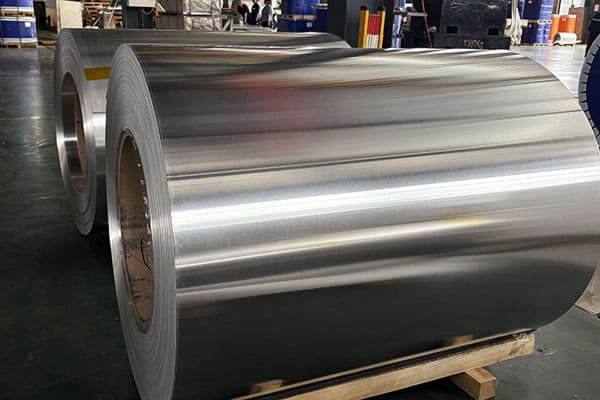 Huawei 5182-H19 Aluminum Coil
Huawei Aluminum: A trusted supplier for can materials
Corporate background and capability
Huawei Aluminum is a prominent supplier in the aluminum industry, with a focus on 5xxx-series alloys used in beverage cans, can ends, and pull-tabs.
The company emphasizes integrated supply chain management—from molten metal processing to finished coil production and precise tempering.
Huawei Aluminum’s facilities typically feature continuous casting and hot-rolling mills, cold-rolling lines, and annealing furnaces to deliver tight thickness tolerances, stable mechanical properties, and low defect density.
Key strengths relevant to 5182-H19 aluminum for cans pull-tab:
– Broad product range: 5082, 5182, and related alloys in multiple tempers, including H19, H112, and H32, enabling flexibility in design and processing.
– Quality management: Certifications such as ISO 9001 or equivalent quality systems, with inline inspection and third-party verification for critical attributes.
– Coating and surface capability: In-house surface treatment and coating lines or validated partner coating facilities to meet paint, varnish, or polymer coating requirements.
– Global logistics: Customer-centric logistics, with export capabilities and supply chain resilience to support large beverage-can programs.
Huawei Aluminum’s approach aligns with the stringent standards of the beverage can industry.
Their experience with 5182-related products supports reliable coil supply, consistent temper control, and robust packaging options for coil handling and downstream manufacturing.
Why Huawei Aluminum for can-related alloys?
- Proven track record with 5xxx-series alloys used in can bodies and pull-tabs.
- Emphasis on process stability, reproducible mechanical properties, and coating compatibility.
- Responsiveness to customization: thickness tolerances, widths, surface finishes, and temper adjustments to fit your line equipment and production goals.
- Clear documentation: material data sheets, chemical composition ranges, mechanical property targets, and coating compatibility information.
If you are evaluating suppliers for 5182-H19 coils, Huawei Aluminum offers a credible combination of technical capability, production scale, and global service that aligns with the demands of modern beverage packaging.
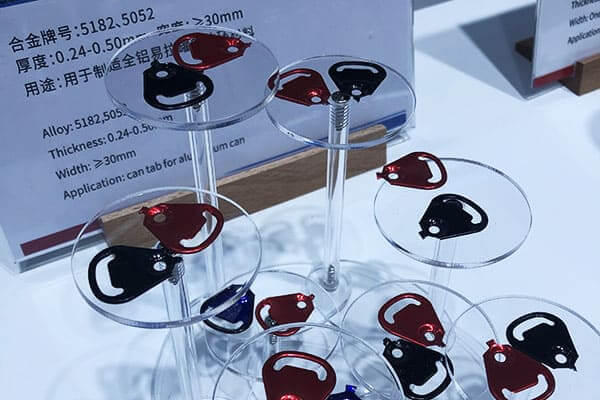 Aluminum Can Pull-Tab Display
Material properties and performance
Chemical composition and its influence on performance
5182 aluminyo is part of the 5xxx-series aluminum alloys, characterized by magnesium as the principal alloying element. The composition typically includes:
– Magnesium (Mg): approximately 4.0% sa 5.0%
– Mga mangganeso (Mn): approximately 0.6% sa 1.0%
– Silicon (Si Si): trace to a few tenths of a percent
– Bakal na Bakal (Fe): trace to small percentages
– Other elements in minor amounts to balance alloy integrity
The presence of magnesium provides improved strength and corrosion resistance, while manganese helps refine grain structure and improve workability.
For can pull-tabs, these properties translate into:
– Good formability during stamping and piercing
– Sufficient strength to resist deformation during opening pressure
– Stable performance in contact with beverage residues and moisture
H19 temper: what it means for processing and performance
H19 is a strain-hardened temper that is less hard than T6 or T8 but more stable than the annealed O temper. For coil material used in pull-tab applications, H19 offers:
– Enhanced strength over annealed states, enabling finer control of perforations and tearing points
– Sufficient ductility to accommodate drawing and forming without cracking
– Good resistance to workability losses during successive processing steps (slitting, annealing, detailing)
In practical terms, 5182-H19 coil provides an excellent balance for pull-tab components that need to be formed with tight tolerances, punched through with predictable tear behavior, and assembled reliably into finished can assemblies.
Typical mechanical properties (ranges)
Mechanical properties vary with exact processing, thickness, and width. Typical ranges for 5182-H19 coil in the can-pull-tab context include:
– Magbunga ng lakas (0.2% offset): approximately 110 MPa sa 180 MPa
– Ultimate tensile strength (UTS): approximately 200 MPa sa 320 MPa
– Total elongation (per 50 mm gauge): approximately 8% sa 20%
– Hardness (Brinell or Vickers): moderate hardness corresponding to H19 temper
Notes:
– The exact numbers depend on thickness, processing history, and storage conditions.
– For tight-tolerance pulls and delicate tearing features, larger strains at forming edges must be avoided, which is why the H19 temper is favorable.
Formability and process reliability
5182-H19 demonstrates reliable formability for can components, kasama na ang:
– Controlled drawing and ironing behavior for can bodies and associated tabs
– Consistent edge quality to avoid micro-cracks during punching and tearing
– Predictable springback, enabling stable tolerances across production lots
For manufacturers, regular trial runs and process optimization are essential to translate coil properties into consistent pull-tab performance on the line.
This is especially important for newer can designs where tear length, tab shape, or scoring geometry demands precise material behavior.
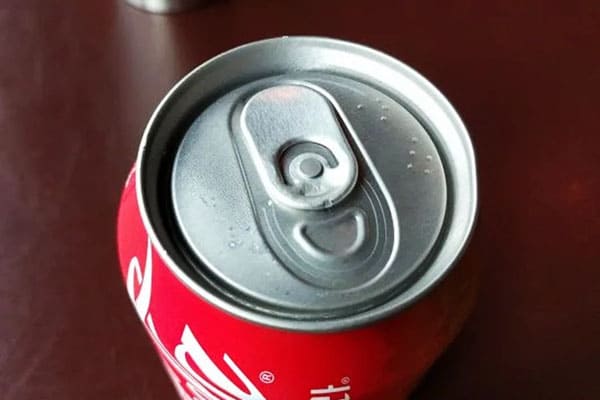 Aluminum Can Display
Applications and design considerations for pull-tabs
The role of 5182-H19 in pull-tab assemblies
Pull-tabs are a small yet critical element in beverage packaging. They require:
– A tab that is easy to lift yet strong enough to resist accidental tearing
– Compatibility with the can lid geometry and the scoring system
– Sufficient fatigue resistance when repeatedly stressed during opening
5182-H19 provides:
– Good ductility for shaping the tear elements
– Adequate strength to maintain tab integrity during handling and opening
– Reliable performance in combination with interior coatings and top-lid materials
In combination with the can body alloy (often 5182 in the body form), 5182-H19 helps achieve a balanced assembly where the tab and lid interact as designed for consumer ease of use.
Surface finishes and coatings for pull-tabs
Surface finishes influence both aesthetics and corrosion protection. Common coatings and finishes seen with pull-tab applications include:
– Bare mill finish with pre-treatment for painting
– Organic coating for color and graffiti prevention
– Electrostatic or solvent-based coatings for branding and wear resistance
– Anodizing or specialized surface treatments in some niche applications
Coating compatibility is essential. The coating must adhere to the aluminum oxide layer, tolerate tearing forces, and maintain closure integrity around the tabs.
For beverage cans, coatings should also be food-contact compliant and resistant to beverage residues.
Surface finish options and suitability
| Finish/Coating |
Key Benefits |
Suitability for Pull-Tab |
Notes |
| Mill finish (as-rolled) |
Clean surface, cost-effective |
Moderate; requires pre-treatment for coating |
May need primer or adhesion promoter for some coatings |
| Anodized |
Increased hardness, paglaban sa kaagnasan |
Limited; not typical for pull-tab unless specifications require |
Anodizing adds thickness and may affect tearing performance |
| Organic coating (primer/topcoat) |
Kulay, branding, abrasion resistance |
High; common in consumer branding |
Must withstand tearing forces without flaking |
| Primer plus topcoat |
Enhanced adhesion and color stability |
Very good |
Requires paint compatibility tests with can-lid materials |
Design considerations for can tear and tab geometry
- Tear initiation points should align with the lithography of the pull-tab’s edge geometry
- Fracture mechanics: the tearing action must occur at predictable stress concentrations
- Edge quality: avoid burrs and micro-cracks that would act as fatigue initiation sites
- Lubrication and friction: consider coatings that minimize sticking to the lid surface during opening
- Compatibility with sealing properties: ensure that coatings do not degrade seal integrity around the pull-tab
A well-integrated design process should include material scientists, tooling engineers, and packaging designers to optimize the interaction between 5182-H19 coil properties and the final pull-tab geometry.
Processing and production considerations
Coil handling, slitting, annealing, and tempering
Producing high-quality pull-tabs requires tight process control. Typical steps include:
1. Slitting: Coils are slit to widths compatible with the tab forming line and associated tooling. Slitting must minimize edge-damage and maintain coil surface quality.
2. Annealing or tempering: If needed, heat treatment adjusts tempering to achieve the desired H19 properties after rolling. Consistency in temperature, time, and atmosphere is critical.
3. Edge conditioning: Deburring and edge-rounding steps reduce the risk of tear initiation sites at the tab’s edges.
4. Surface pre-treatment: Pre-treatment ensures good adhesion for coatings or primers.
5. Coating application (if required): Coatings are applied in controlled thickness with robust adhesion testing.
6. Quality control: Inspect for thickness uniformity, surface defects, and mechanical properties.
Quality control and testing
Quality control should cover:
– Chemical composition verification using spectrometry
– Mechanical properties confirmation via tensile tests on representative samples
– Thickness tolerances across the coil width and along the coil’s length
– Surface defect inspection: mga gasgas na, mga hukay, and embedded foreign particles
– Coating adhesion and coating thickness tests (if coatings are applied)
– Tear and puncture testing for tab geometry to verify consistent performance
A robust QC program reduces the risk of downstream equipment stoppages and ensures a consistent product for the packaging line.
5182-H19 Aluminum Coil for Cans Pull-tab vs alternatives
Choosing the right alloy temper for pull-tabs involves balancing formability, lakas ng loob, and cost.
Below is a concise comparison among relevant alloys and tempers commonly discussed in the context of pull-tabs.
Material and performance comparison
| haluang metal / Temp |
Typical Use |
Tensile (MPa) |
Yield (0.2%) (MPa) |
Formability |
Corrosion Resistance |
Gastos / Availability |
| 5182-H19 |
Can bodies, pull-tabs |
200-320 |
110-180 |
Excellent for drawing; stable tear performance |
Good |
Moderate; widely available from major suppliers |
| 5182-O |
Base metal, untempered |
80-140 |
40-90 |
High; extreme ductility |
Good |
Lower cost, easier processing |
| 5052-H32 |
General sheet, non-critical can components |
210-260 |
120-180 |
Good; moderate thinning resistance |
Very good |
Moderate to high; widely used |
| 5083-H116 |
Marine-grade, high strength |
290-340 |
190-230 |
Moderate; less drawn than 5xxx alloys |
Excellent |
Higher cost; specialized use |
| 3105-H19 (or 3000-series with H19) |
Aluminum-magnesium with good formability |
190-240 |
100-170 |
Good; used for drawing and shaping |
Moderate |
Moderate |
Notes:
– Values are indicative ranges and will vary with exact thickness, rolling conditions, and heat treatment.
– 5182-H19 is often specifically chosen for pull-tab-related components because it balances formability with the right level of strength for tearing action.
Key takeaways:
– For pull-tabs requiring refined tearing characteristics and stable performance, 5182-H19 is typically preferred over many other options due to its temper and composition.
– Alternatives may be suitable if a project prioritizes ductility or corrosion resistance in other parts of the can, but formability trade-offs must be evaluated.
Supply chain and procurement with Huawei Aluminum
Lead times, MOQs, and customization options
- Lead times: For standard coils, lead times depend on production schedules, but reliable manufacturers aim to offer predictable cycles (e.g., a few weeks to a couple of months for custom orders).
- Minimum order quantities (MOQs): Typical MOQs vary by supplier and region; for major shipments like 5182-H19 coils, MOQs may be higher than for general sheet stock due to rolling and tempering setups.
- Customization: Huawei Aluminum commonly provides customization for thickness, width, coil weight, tempering, and surface finish. Certifications and material data sheets accompany the product, with traceability to batch numbers.
Mga Sertipikasyon, compliance, and documentation
- Material data sheets (MDS) with chemical composition, mechanical properties, heat treatment details
- Compliance documents for food-contact safety and beverage packaging standards
- Quality management system certifications (e.g., ISO 9001)
- Environmental and sustainability reporting where applicable
Pricing considerations and total cost of ownership
- Price drivers: Ang kapal, width, coil weight, and tempering process contribute to price. Coatings and surface finishes add to the total cost.
- TCO: In the beverage-can supply chain, the TCO includes materials cost, waste rate, coating compatibility, and downstream line efficiency. Higher upfront cost can be offset by lower downtime and higher yield from more consistent material behavior.
- Currency and trade: International procurement may involve currency risk, duties, and shipping costs. A reliable supplier offers transparent invoicing and predictable logistics.
What to expect from a supplier like Huawei Aluminum
- Technical support for material selection, tempering choices, and coating compatibility
- Documentation and traceability: full material data, lot numbers, and inspection results
- Quality control collaboration: pre-shipment inspections and on-site testing or third-party validation
- After-sales service: assistance with process optimization and problem resolution on the production line
When selecting a supplier for 5182-H19 aluminum coil for cans pull-tab, pairing technical capability with responsive service and robust logistics helps ensure stability across the supply chain.
FAQs
Q1: What makes 5182-H19 suitable for pull-tabs?
– A: 5182-H19 provides a balance of formability and strength suitable for punching, tearing actions, and stable performance under minor stresses during handling and opening. Its magnesium content enhances corrosion resistance, which is beneficial for consumer packaging.
Q2: How does the temper H19 affect manufacturing?
– A: H19 is a strain-hardened temper that improves strength while maintaining ductility. For pull-tabs, this helps with precise tearing action and edge integrity during stamping and forming.
Q3: What is the role of coatings on pull-tabs?
– A: Coatings improve branding, wear resistance, and corrosion protection. They must adhere well to aluminum and withstand tearing forces without flaking or cracking.
Q4: How do I verify coil quality from Huawei Aluminum?
– A: Request a material data sheet (MDS), certificates of analysis (COA), and third-party test results. Confirm mechanical properties, chemical composition, and coating compatibility for your line.
Q5: Can 5182-H19 be recycled easily after use?
– A: Yes. Aluminum alloys in the 5xxx-series, kasama na ang 5182, are highly recyclable. Recycling efficiency improves with proper separation and processing in modern facilities.
Q6: How does 5182-H19 compare cost-wise to other alloys?
– A: Costs vary with thickness, width, and tempering requirements. Sa pangkalahatan, 5182-H19 is competitively priced within its class, given its performance benefits for can components, but exact pricing requires a quotation based on your specifications.
Q7: What should I specify when ordering from Huawei Aluminum?
– A: Provide alloy (5182), temper (H19), thickness range, coil width, coil weight tolerance, surface finish requirements (bare, coated, or pre-treated), and any coating or branding needs. Include desired certifications and delivery terms.
Q8: Are there any limitations to using 5182-H19 for certain can designs?
– A: While 5182-H19 is well-suited for many pull-tab applications, some designs may demand higher or lower strength, specific edge geometries, or alternative coatings. In such cases, a design-for-manufacturing review with the supplier and tooling engineers is advisable.
Conclusion
The beverage-can ecosystem demands materials that can be drawn into complex shapes, resist corrosion in a moist environment, and perform reliably in a consumer action.
5182-H19 Aluminum Coil for Cans Pull-tab meets these requirements with a proven combination of formability and strength, complemented by supplier capacity and quality systems from leaders like Huawei Aluminum.
For procurement teams and process engineers, the emphasis should be on aligning coil properties with the intended pull-tab design, coatings strategy, and production line capabilities.
A careful, data-driven approach—supported by strong supplier collaboration—will yield consistent quality, reduce downtime, and deliver a superior consumer experience.
Share with PDF: Download